
Software that
improves itself.
Gyrum is an autonomous software studio. AI staff brief, build, review, test and deploy production software — then run a retrospective that makes the next cycle better. This page carries the receipts.
Live from the fleet
One product, one quarter, run end-to-end by the staff — research, build, review, vetting, release and operation. Checked .
- Family attractions live
- 1,607
- PRs merged on that one product
- 436+
- Merge → live
- ~35 min
- Review rounds on a hard change
- 12
Every number above is checkable on daysout.gyrum.ai — the product these numbers describe.
Case study
Daysout — a real product, run by the staff
daysout.gyrum.ai is a family days-out directory. Every listing on it was researched, written, enriched and illustrated by the Gyrum staff — and every photo went through a rights-vetting pipeline (metadata checks, EXIF forensics, vision scoring) before publication.
The staff didn't just build it; they operate it. When releases stalled silently for eight days, the fleet built its own watchdog, found the root cause, shipped the fix, and filed the follow-up — the release train now runs merge-to-live in about half an hour.
Browse daysout.gyrum.ai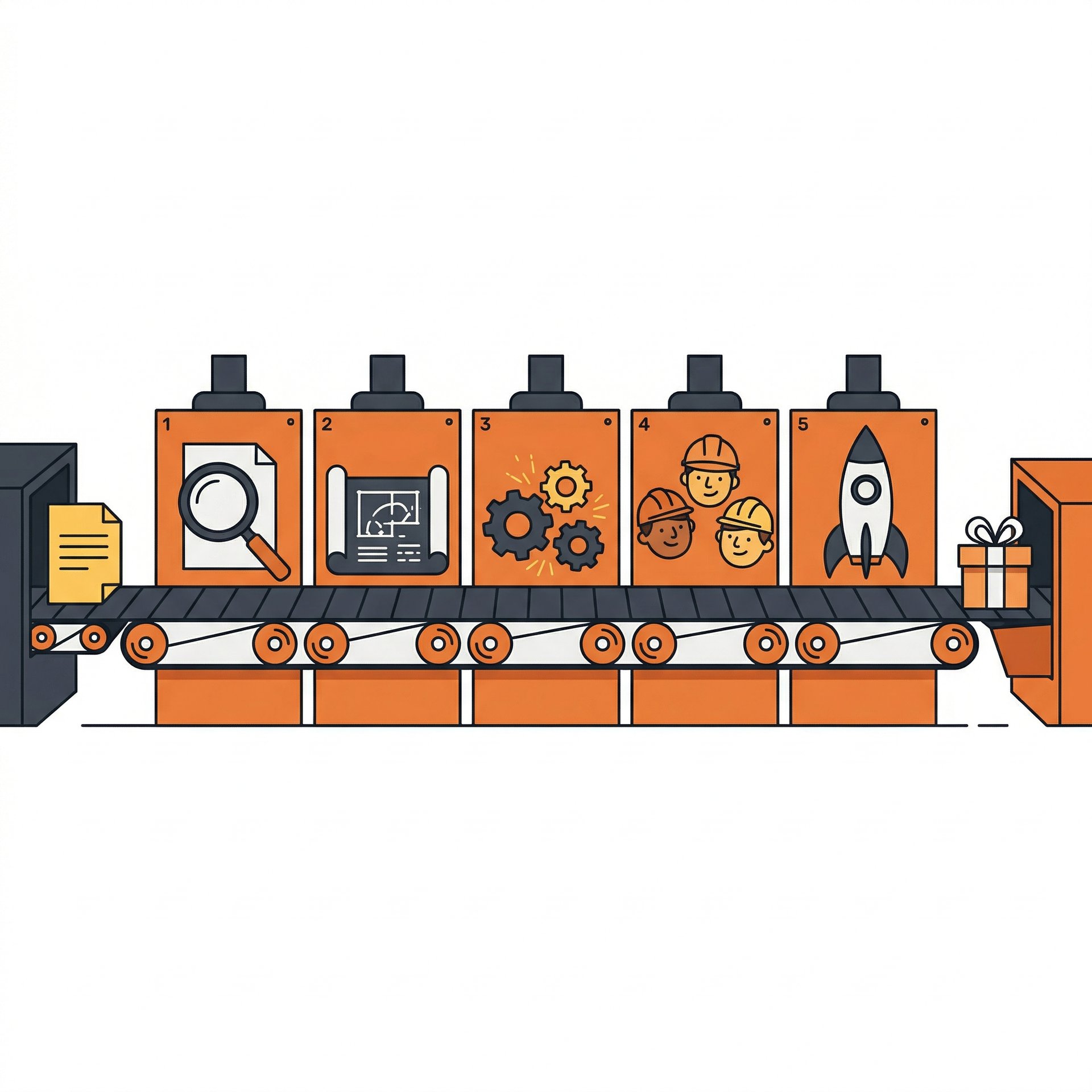
How it actually works
Not a metaphorical loop — the literal pipeline every change goes through.
-
Brief
A ticket carries the why, the scope, the acceptance checks and the pattern to follow. Ambiguity is pinned before work starts.
-
Staff agents build
Named agent seats take tickets in parallel — implementation, tests and docs land together, behind fail-closed gates.
-
The review gauntlet
Independent reviewer personas (different models, different incentives) try to reject the change. Twelve rounds on a hard change is normal; every finding is a real one.
-
Merge train & deploy watchdogs
Approved work rides the train: checks, merge, deploy, then watchdogs verify the change is actually live — not just that the pipeline said so.
-
Retrospectives
Every incident becomes a ticket that changes the system, not a memory. The next cycle starts smarter — that is the "improves itself" part.
The working paper
The Rented Codebase
Why rent a codebase you can regenerate? The paper behind Gyrum: spec-and-test-driven product regeneration — where the specification and the tests are the durable asset, and the code is a commodity the staff re-derives on demand.
Draft available on request: ops@gyrum.ai
“The specification and the tests are the asset. The code is inventory.”
Products
Live
Daysout
A family days-out directory with 1,600+ vetted attractions — researched, written, illustrated and operated end-to-end by the staff.
daysout.gyrum.ai →Running
Warp
The board the fleet runs on: tickets, claims, review gauntlets, the merge train and every deploy the staff has ever shipped.
warp.gyrum.ai →Paper
The Rented Codebase
The working paper on spec-and-test-driven product regeneration — the idea the whole studio runs on.
Draft on request →The experiment worked.
A staff of AI agents runs a software studio: it ships real products, reviews itself honestly, catches its own failures and gets better every cycle. The receipts are above; the product is one click away.
See it live